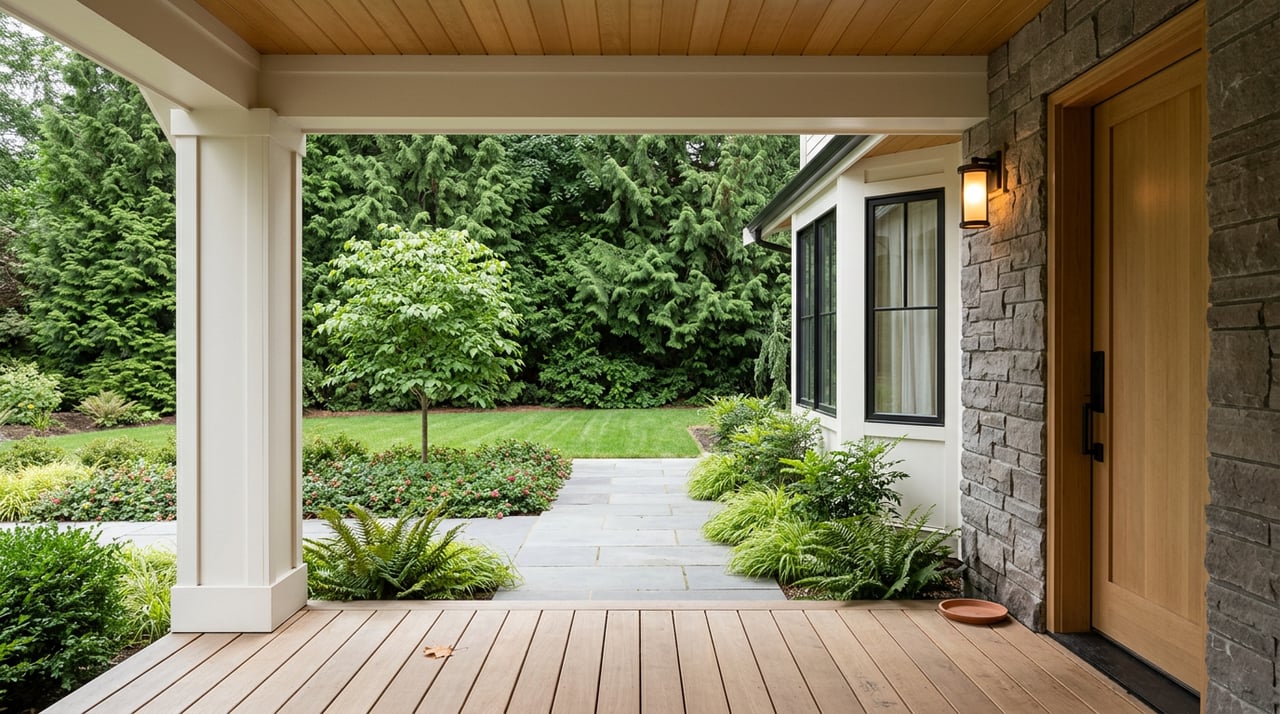
Selling a 1980s or 1990s Mill Creek Home: The Inspection Findings That Reshape Your Sale
If you own an original-construction home inside the Mill Creek Country Club neighborhoods, the most important decision in your sale is not the list price. It is whether to order a pre-listing inspection at all, and if you do, what you plan to do with the report the moment you read it.
That decision matters here more than in most Snohomish County submarkets because Mill Creek's original divisions were built as a planned community starting in 1976, and entire streets share the same siding, roofing, and window systems that are all reaching end of life at the same time. Once a report names those issues, Washington law treats them as your actual knowledge, and your Form 17 obligations change with the ink.
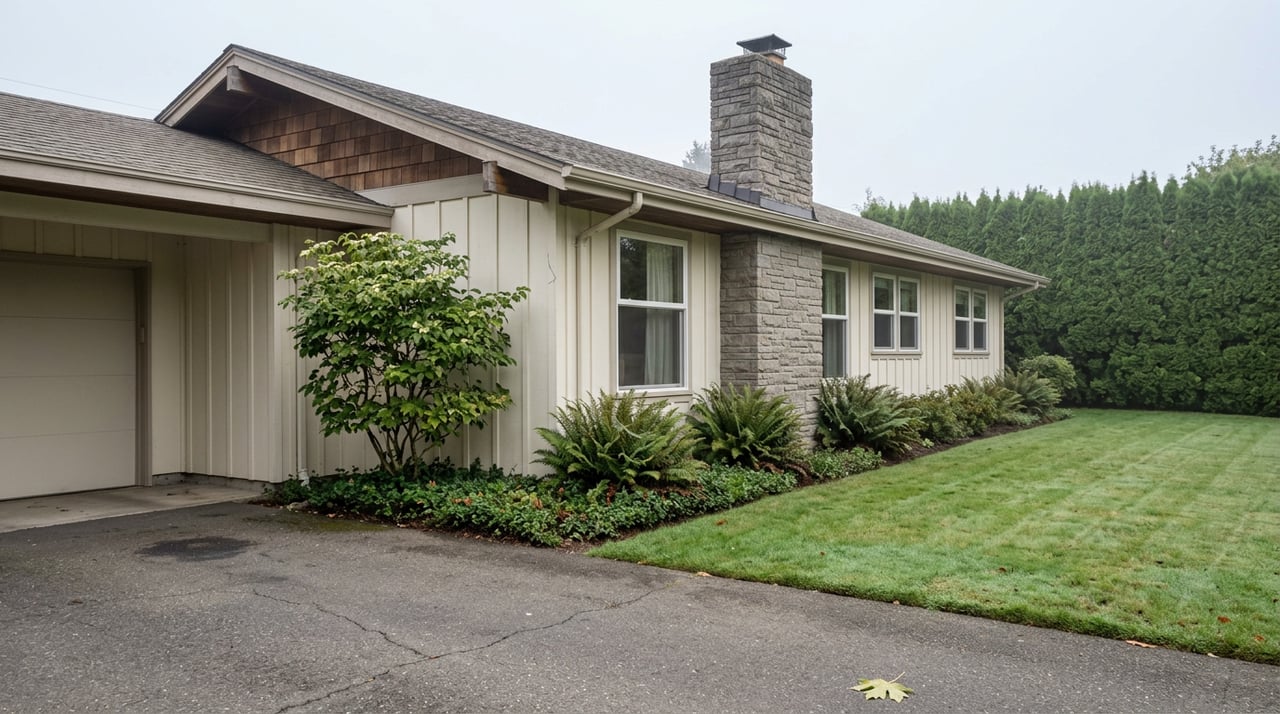
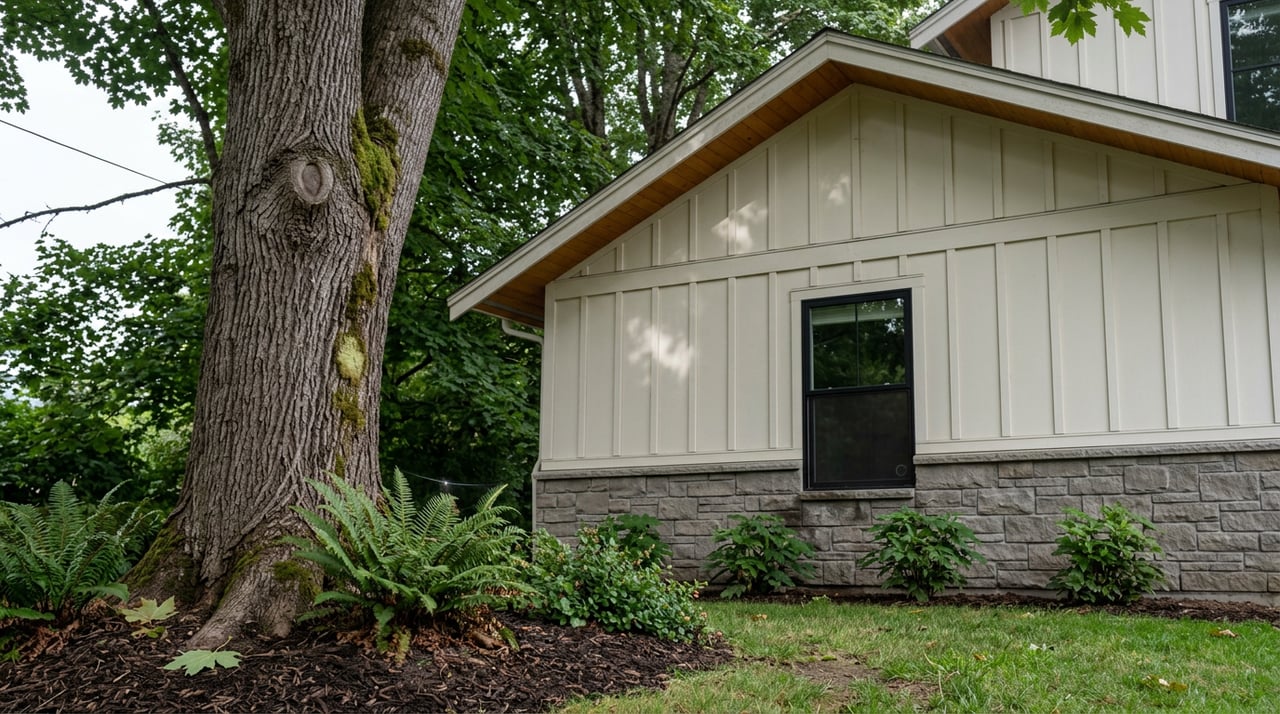
The homes in Fairway, Fairway Village, Country Place, Vine Maple, Huckleberry, Stratford Greens, Mill Run, and the other original MCCA divisions were built with materials that were standard in their era and are now consistently failing. Local siding specialists working these blocks find that Mill Creek's original T1-11 plywood panels from the 1976 to 1990s build period are rotting at the bottom edges where moisture wicks up through the grooves, and 1990s LP Inner-Seal hardboard is swelling at the bottom edge on north-wall sections. Homes built during Mill Creek's primary development phase in the 1980s and 1990s are now 30 to 40 years old, and many are experiencing the coordinated end-of-life failure of original siding, roofing, and window systems installed during initial construction.
Two site conditions accelerate the pattern. The trees planted in the 1970s and 80s are now 40 to 50 feet tall, and north-facing walls in the tree-named subdivisions never see sun. The area also receives roughly 44 inches of rain a year, and 1970s to 80s construction in the region often went up without a modern weather-resistive barrier, so moisture damage frequently shows up at window corners and bottom-of-wall sheathing once siding comes off. An inspector who pushes on the bottom six inches of a T1-11 panel and finds it soft is not making a discovery. They are confirming what the block already knows.
Sellers often read the headline number and assume they have room to leave issues for the buyer. The June 2026 numbers say something more specific.
That last number is the one that reshapes strategy. When the typical buyer is landing within 1.6% of asking, there is very little cushion for a mid-transaction repair credit before the deal starts to feel underwater to the seller. A $30,000 re-side credit against a $975,000 sale is more than three times the average price-to-list gap. The market rewards clean, and it punishes surprises found after mutual acceptance.
Sellers who decide to get ahead of siding or exterior work often run into a sequencing problem that has nothing to do with construction. Mill Creek's exterior review runs on two separate tracks.
The friction is not any single step. It is that MCCA approval typically has to be in hand before the city permit application is submitted, and neither review is designed around the calendar of a seller who wants to list in three weeks. Sellers who assume they can start exterior work on a Monday and list the following weekend routinely lose a month.
Washington's Real Property Transfer Disclosure Statement, Form 17, is a knowledge-based document. Under RCW 64.06.020, the seller discloses existing material facts or material defects based on actual knowledge at the time of signing, and the buyer generally has three business days from receipt to rescind the agreement in writing.
You are not required to inspect your own home. You are required to disclose what you know. That distinction is the whole game.
The moment you accept delivery of a pre-listing inspection report, you have actual knowledge of everything in it. Failed T1-11 at the base of a north wall stops being a suspicion about your house and becomes a documented finding you must answer honestly on Form 17. If a buyer later shows you knew about a material defect and did not disclose it, Washington case law allows claims for negligent or intentional misrepresentation, and concealment supports a fraudulent concealment claim. A materially amended Form 17 also restarts a three business day rescission window for the buyer, so a mid-transaction discovery is not just an emotional event. It is a fresh out for the buyer.
This is why the sequencing question matters. A pre-listing inspection is often the right call for a 1980s or 1990s Mill Creek home, but only if you have already decided in advance which of three paths you will take with whatever it finds.
| Path | What you do before listing | Where it fits in Mill Creek today | Trade-off |
|---|---|---|---|
| Fix | Complete MCCA and city approvals, re-side or repair, list with documentation and warranties | Homes where obvious T1-11 rot or LP swelling would kill photo appeal and inspection response, and the seller has 6 to 10 weeks | HardiePlank with ColorPlus commonly runs about $14 to $20 per square foot installed, and a typical Mill Creek re-side lands roughly $21,000 to $42,000, with sheathing rot repair adding on top |
| Price in | Adjust list price to reflect known issue, disclose fully on Form 17, market to buyers who want a project | Homes where scope is unclear or seller cannot front the cash, and where recent comps already reflect similar condition | You give up more than the repair cost in most cases, because buyers price risk higher than actual bids from vetted trades |
| Disclose and credit | List as-is, disclose known issues, negotiate a repair credit at inspection response | Rare in a 98.4% sale-to-list market, but workable when the fix is bounded and you have written bids in hand at listing | Credits erode the "clean" positioning that this market rewards, and the buyer's lender may cap what can be credited |
A seller who has not decided among these three before ordering an inspection is essentially outsourcing their strategy to whichever finding lands hardest in the report.
The practical order of operations for an original-construction Mill Creek home looks less like a checklist and more like a set of questions answered in the right sequence. Confirm whether the property sits inside MCCA, a non-MCCA division such as The Parks or The Reserve, or the separately governed Heatherwood area, because that determines your design review path. Get written scoping bids from siding contractors familiar with T1-11 and LP substrate conditions before you order the inspection, so you already know the likely repair range if the report confirms what the walls suggest. Then choose the path.
A "perfect" disclosure statement on a 40-year-old Mill Creek home reads to experienced buyers and their agents the way a freshly painted basement reads to a home inspector. It invites more scrutiny, not less. Disclosing what you actually know, paired with documentation and bids, tends to hold price better than silence in this submarket.
Does MCCA approval expire if my sale closes before I do the work? MCCA design approvals are tied to the property and the approved plans. If a buyer intends to complete a project you started, request that MCCA approvals and any city permit records transfer with the sale, and disclose the status on Form 17.
Do I have to disclose a pre-listing inspection I chose not to act on? Washington's standard is actual knowledge of material facts or defects. A report in your possession creates actual knowledge of what it contains. Discarding the report does not undo that knowledge.
Is my home more marketable if I re-side before listing or offer a credit? In the current Mill Creek market, with homes selling in a median of 11 days at 98.4% of list, completed exterior work tends to hold price better than an equivalent credit. Buyers pay a premium for certainty, and lenders sometimes cap credits.
Every 1980s or 1990s Mill Creek home is on the same clock as its neighbors, but no two sales sit in the same spot on that clock. If you are thinking about listing inside MCCA, near the Country Club, or in one of the non-MCCA divisions, the right first conversation is about sequencing, not staging. Mauri Tracy will walk your property, review the divisions and design-review context that apply to your address, and help you decide whether a pre-listing inspection is the leverage you think it is. Let's Connect.



Experience personalized guidance, clear communication, and dedicated support focused on helping you achieve your real estate goals with confidence.
Mauri Tracy | Windermere Real Estate
MAURI TRACY | WINDERMERE REAL ESTATE
2737 77th Ave SE , Ste 100 Mercer Island, WA 98040