Edmonds Housing Prices and the Highway 99 Revitalization Timeline
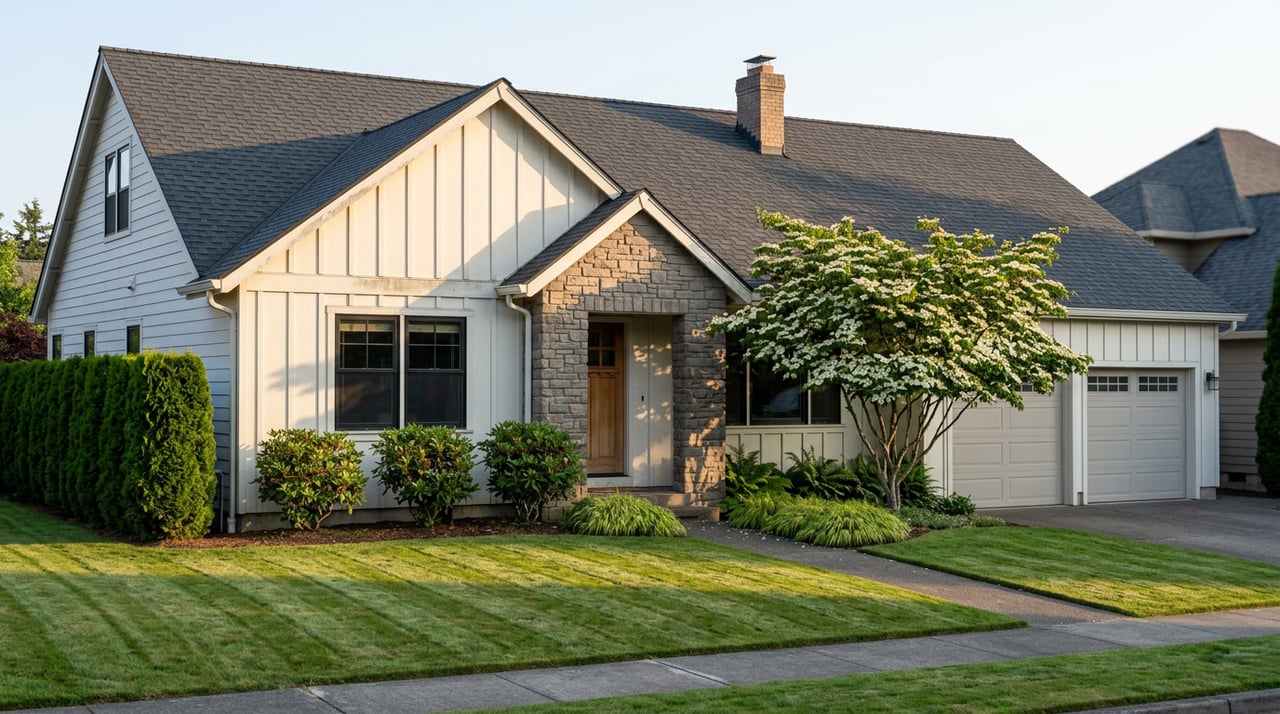
Drive out of downtown Edmonds toward the water and the streets narrow, the sidewalks turn to brick in places, and the Sound opens up at the bottom of the hill. Turn the other direction, east toward Five Corners and Highway 99, and within a mile the scenery changes to a four-lane state route lined with strip retail, gas stations, and a two-way turn lane. Both streets are still Edmonds. The homes near each one carry very different price tags. The corridor's zoning and planned infrastructure improvements are part of this contrast.
Edmonds doesn't have one housing market. It has three, stacked by geography. The Bowl and the waterfront carry the premium: as of June 2026, sales in the Port of Edmonds micro-market have averaged close to $963,000, up roughly 20 percent from a year earlier. East of that, Seaview, Perrinville, and Westgate offer established mid-century homes within easy reach of downtown at a step down in price. Then there's Five Corners and the Highway 99 corridor, which hold the city's most attainable single-family stock and its newest townhome construction.
You can see the gap in actual listings. A three-bedroom townhome resale at Copperfield Village, off 196th Street SW near the corridor, has recently come to market in the $600,000 range. Homestead in Edmonds, an updated townhome community off 80th Avenue W, has listed closer to $500,000. Compare that to Maplevine, a condo building just west of downtown, where a two-bedroom unit recently sold near $700,000, or Seavue, a Bowl-adjacent building where a remodeled two-bedroom condo closed at $1,140,000. The corridor's lower-priced homes are located in the stretch designated to absorb growth.
This pattern reflects land-use policy dating to 2017, when the City Council adopted the Highway 99 Subarea Plan, a document that set the long-term vision for land use along the corridor's 2.25 miles running from 244th Street SW to 210th Street SW. For years afterward, nearly all of Edmonds' future multifamily housing capacity was concentrated on that stretch.
The Urbanist reported on the 2025 Comprehensive Plan debate over the proposed North Bowl hub. Planners floated a modest new option: a "North Bowl hub" that would have allowed some added density up the hill from downtown, spreading a slice of future housing capacity away from the highway. Residents pushed back hard, and not by arguing against density itself. One North Bowl resident asked the city directly why it had looked past the housing potential already sitting on Highway 99 before proposing new density elsewhere. Four separate councilmembers, prompted by Council President Niel Tibbott's call for Comprehensive Plan revisions, asked staff to reconsider the North Bowl hub, and Councilmember Michelle Dotsch asked that it be removed from the growth plan entirely. The city ultimately kept most of its future housing capacity along the highway.
The corridor's other half of the story is the city's plans for infrastructure improvements and the project's timeline. The sequence so far:
Stage 3 funding, as shared at the April 2026 open house, totals roughly $36 million in combined city and state money, including a $22.5 million state legislative allocation and $6.5 million in state Complete Streets funding. The project will widen sidewalks, add crosswalks with mid-block landings, upgrade stormwater management, and potentially bury overhead utility lines. The city's transportation engineer, Bertrand Hauss, has described the goal as slowing traffic, adding safer crossings, and improving the corridor's look and economic activity all at once.
Stage 3 construction is scheduled to begin in mid-2028. At the April open house, residents noted that sections of Highway 99 in Lynnwood and Shoreline had been rebuilt while the Edmonds segment remained largely unchanged.
None of this makes the corridor a bad place to buy. It makes it a specific kind of trade. A buyer choosing a townhome at Copperfield Village or Homestead in Edmonds over a condo near the Bowl is choosing a lower price today in an area where the city has planned street improvements. The wider sidewalks, the buffered bike lanes, and potential utility burial: none of that shows up in the price of a corridor home yet, because none of it has been built yet.
Buyers weighing the Bowl premium, by contrast, are paying for a downtown and waterfront environment the city finished revitalizing decades ago. That's a real difference in what your money buys, not just in square footage or lot size, but in how finished the surrounding infrastructure already is.
A few things worth checking before you write an offer on either side of that line:
Whether you're comparing a Bowl condo to a corridor townhome or trying to figure out what a specific Edmonds street is really worth right now, the answer usually depends on details a citywide median can't capture. If you want a second set of eyes on a specific listing or neighborhood before you write an offer, Mauri Tracy can walk through what the numbers actually mean for your situation. Let's Connect.
Experience personalized guidance, clear communication, and dedicated support focused on helping you achieve your real estate goals with confidence.
Mauri Tracy | Windermere Real Estate
MAURI TRACY | WINDERMERE REAL ESTATE
2737 77th Ave SE , Ste 100 Mercer Island, WA 98040